How AI Can Support Mental Health

AI tools are everywhere right now! Helping people write emails, organize tasks, reflect on emotions, and even feel less alone in moments of stress. For many people, especially those who are neurodivergent or overwhelmed, AI can feel like a helpful mental shortcut. In many ways, it can be helpful. However, it’s important to say this clearly and repeatedly:
AI can support your mental health, it cannot replace a real therapist.
The healthiest way to use AI is as a tool alongside therapy, not as a substitute for it. This article explores how AI can help, where it falls short, and how to use it in a way that actually strengthens your mental health instead of quietly undermining it.
What AI Can Do For Mental Health
AI is best at helping with organization, clarity, and preparation. It works well when emotions feel overwhelming and you need help putting thoughts into words, but not when deep emotional processing or pattern recognition is required.
How AI Can Help (When Used Intentionally)
🧠 Supporting Neurodivergent Brains
For people with ADHD, autism, dyslexia, or executive functioning challenges, AI can reduce mental load.
Helpful uses include:
Breaking tasks into steps
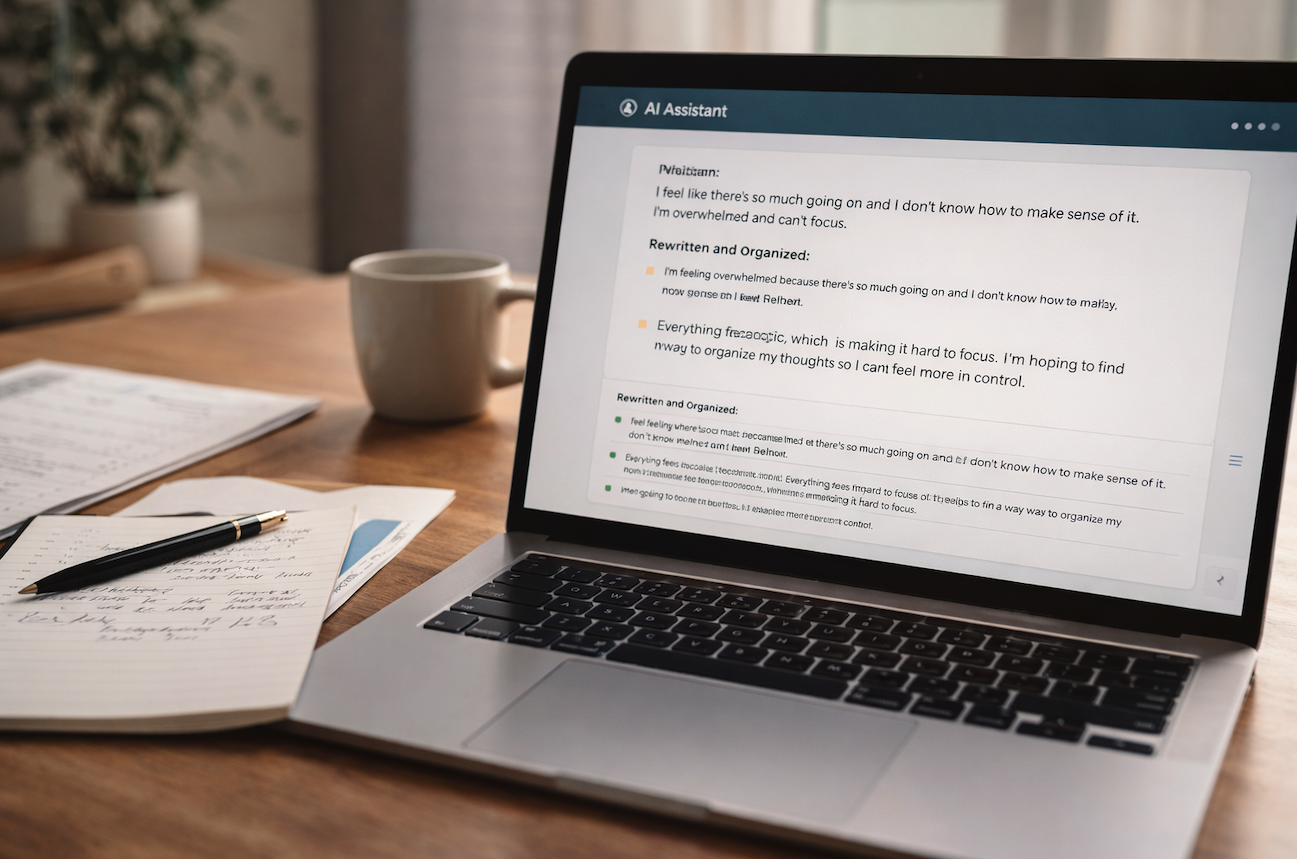
Organizing racing or scattered thoughts
Rewriting ideas more clearly
Creating structure when starting feels impossible
Research shows that executive functioning support improves emotional wellbeing in neurodivergent individuals (Barkley, 2015).
Important distinction:
AI can help organize your thoughts, therapy helps you understand your emotional experience and identity. – Kathryn Boardway
💼 Mental Health at Work
Workplace stress is one of the biggest contributors to anxiety and burnout.
AI can help by:
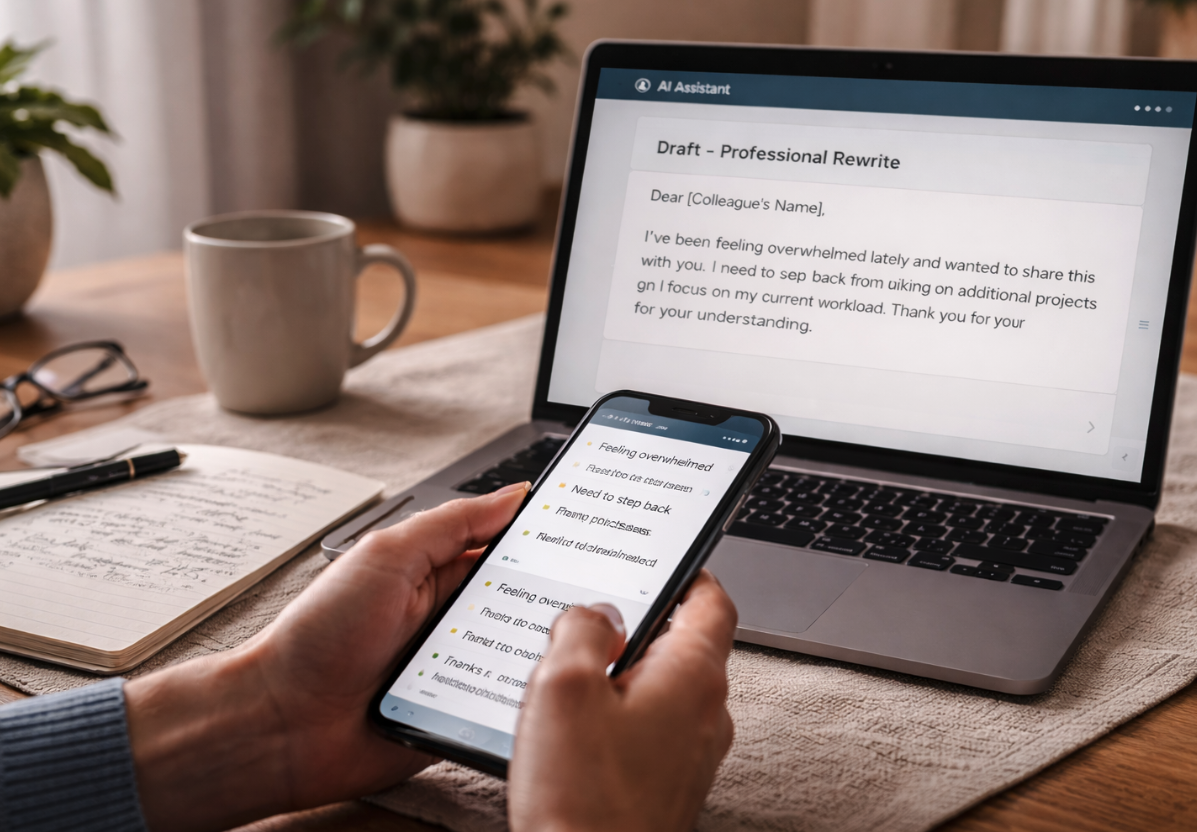
Rewriting emotional emails into professional language
Preparing for difficult conversations
Clarifying boundaries respectfully
Reducing impulsive communication
This can lower immediate stress, but therapy is still essential for exploring why work dynamics trigger anxiety, people-pleasing, or shutdown responses.
Studies on occupational stress consistently show that emotional insight and relational processing, not just communication tools, reduce burnout long term (Maslach & Leiter, 2016).
🤝 Friendships & Relationships
AI can help when emotions feel too intense to communicate clearly.
Examples:
Drafting messages you later personalize
Slowing down reactive responses
Clarifying what you want to say before saying it
The risk:
If AI becomes the only way you communicate, it can prevent you from building emotional tolerance and repair skills.
Therapy teaches you how to stay present with discomfort, not just edit it away.
🌬️ Stress & Emotional Regulation
AI can offer:
Grounding prompts
Journaling questions
Psychoeducation about anxiety or trauma responses
This can be helpful between therapy sessions , especially while learning new coping skills.
But AI does not:
Notice avoidance patterns
Track emotional numbing
Gently challenge self-sabotage
Help integrate emotions into lived experience
Those are relational processes, and they require a human therapist.




Why AI Is Not a Therapist (And Can’t Be)
⚠️ AI Is Often Too Reassuring
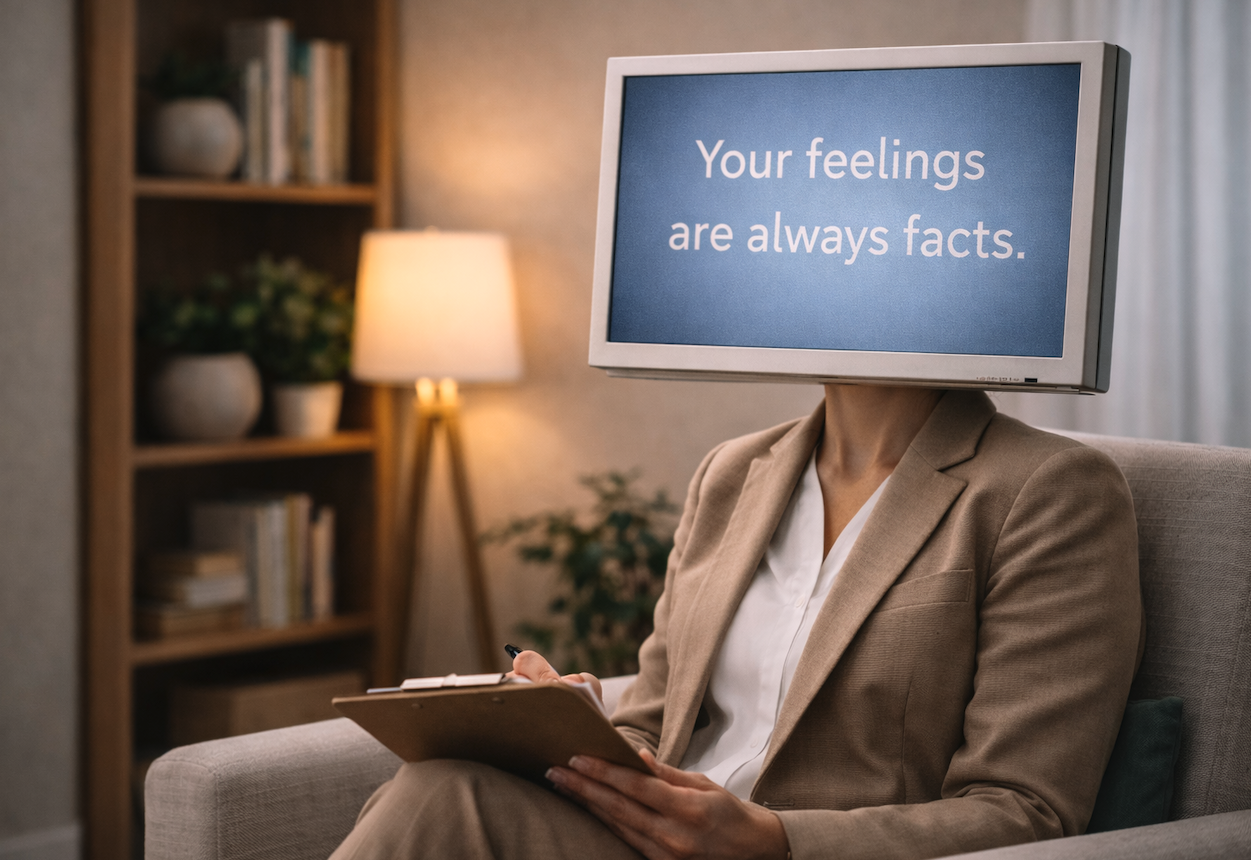
AI tends to validate, even when challenge is needed.
Validation is important, but growth often requires:
Being gently called out
Recognizing patterns
Sitting with discomfort
Research on effective therapy consistently highlights the importance of therapeutic alliance and appropriate challenge (Norcross & Lambert, 2019).
AI cannot responsibly do that.
⚠️ Avoidance Can Masquerade as Self-Care
If AI is used to:
Rewrite every message
Process every emotion externally
Seek constant reassurance
…it can unintentionally reinforce avoidance.
Emotional resilience comes from practicing regulation, not outsourcing it.
⚠️ Skill Loss Over Time
Mental health skills grow through use:
Emotional regulation
Boundary setting
Communication
Reflection
If AI does the work for you instead of with you, those skills weaken.
Therapy builds internal capacity.
AI offers temporary support.
How to Use AI in a Healthy Way
A simple rule of thumb:
AI can help you prepare and reflect, but it shouldn’t decide, diagnose, or emotionally lead you.
Healthy uses:
Preparing for therapy sessions
Organizing thoughts before difficult conversations
Practicing drafts, then choosing your own words
Learning concepts you discuss later with a therapist
Red flags:
Replacing therapy with AI
Seeking reassurance repeatedly
Avoiding emotional discomfort
Letting AI guide major emotional decisions
Why Therapy Still Matters – Everywhere in the Process
Therapy is where:
Emotional patterns are identified
Trauma is processed safely
Avoidance is gently challenged
Growth is supported over time
Real relational repair happens
Research consistently shows that human connection, attunement, and accountability are the strongest predictors of therapeutic change (Wampold & Imel, 2015).
AI can assist mental health care.
Therapy transforms it.
Final Thoughts
AI can be a powerful support tool, especially for organization, clarity, and accessibility. When used thoughtfully, it can reduce stress and help people feel more capable.
- But healing happens in relationship.
- Growth requires accountability.
- Emotional change unfolds over time with another human.
AI can support the journey. A real therapist guides it!
References
Barkley, R. A. (2015). Attention-Deficit Hyperactivity Disorder: A Handbook for Diagnosis and Treatment.
Maslach, C., & Leiter, M. P. (2016). Burnout.
Norcross, J. C., & Lambert, M. J. (2019). Psychotherapy relationships that work.
Wampold, B. E., & Imel, Z. E. (2015). The Great Psychotherapy Debate.
American Psychological Association (2023). AI, ethics, and mental health care.