Office Hours Open: M-F 8am - 7pm
Call Us: ‪(858) 215-2319‬
e-mail: info@groundedrootsmht.com
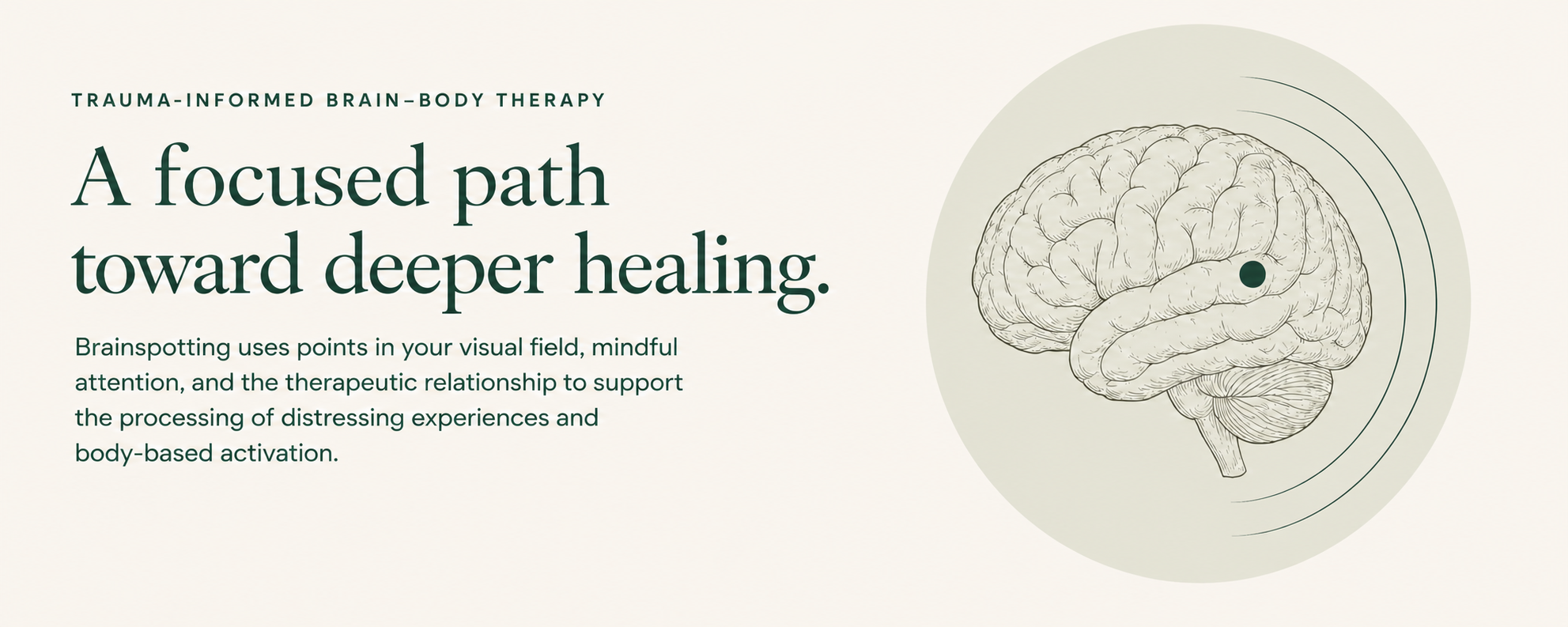
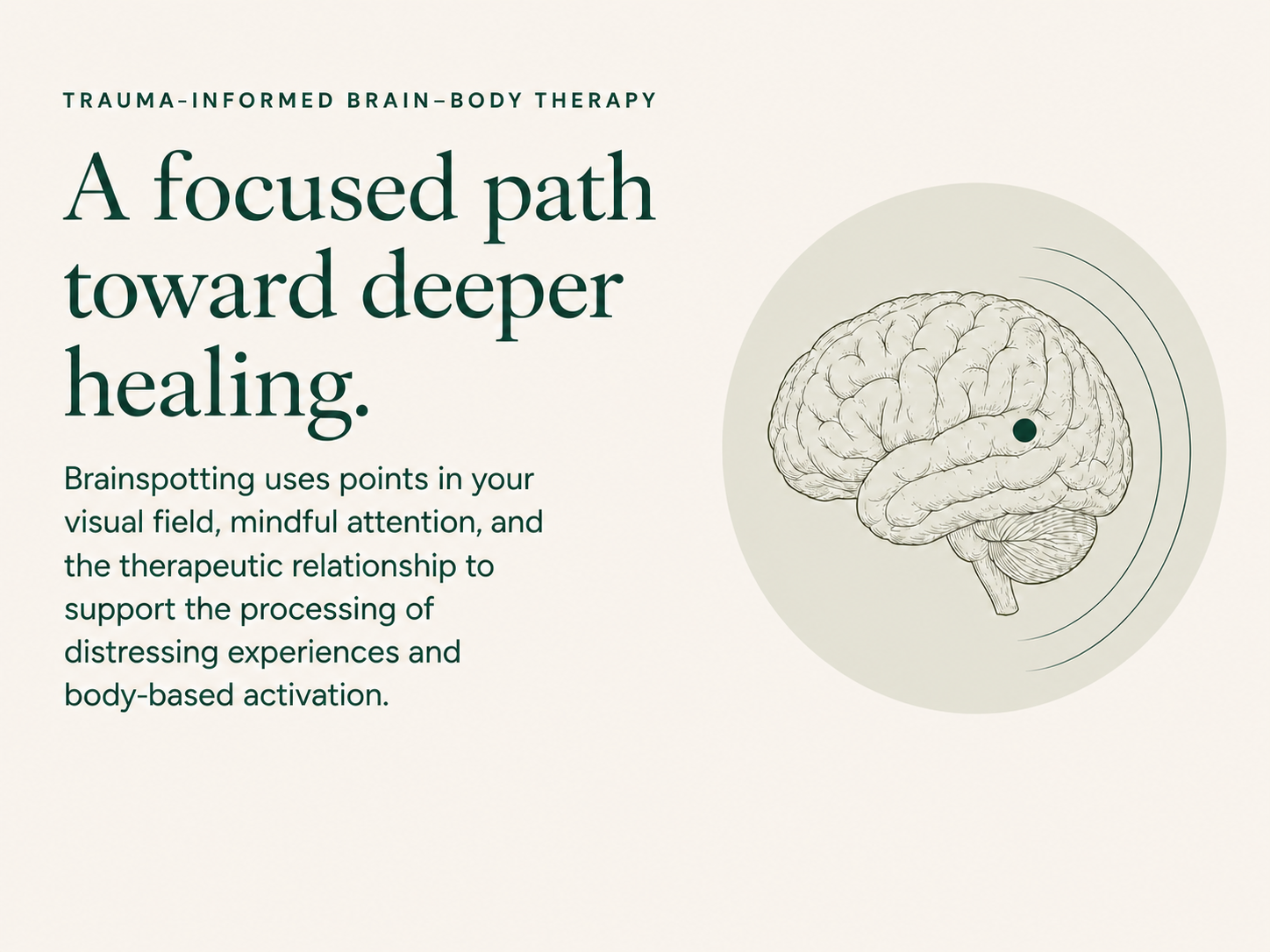
Trauma-informed brain-body therapy: a focused path toward deeper healing. Brainspotting uses points in your visual field, mindful attention, and the therapeutic relationship to support the processing of distressing experiences and body-based activation.
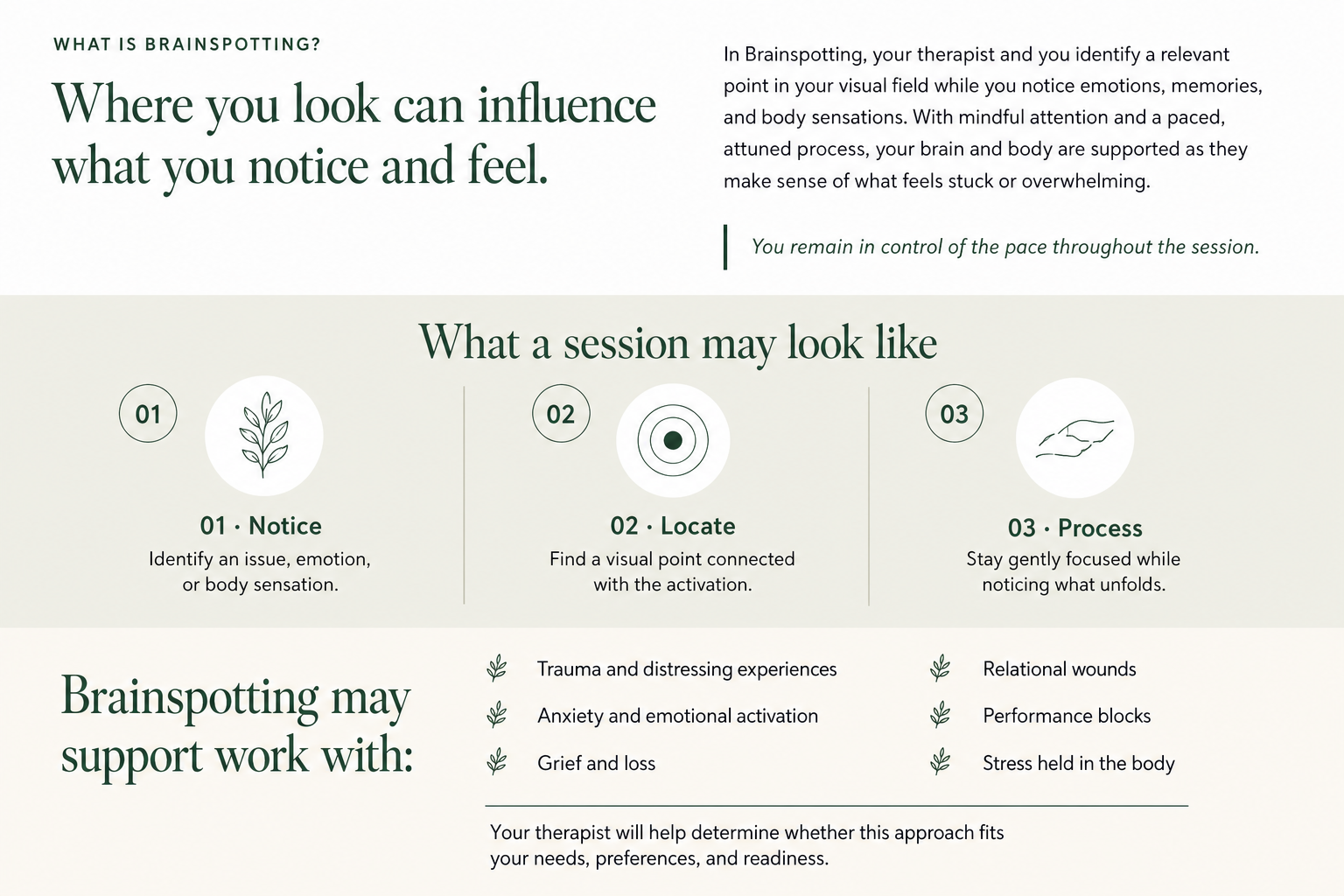
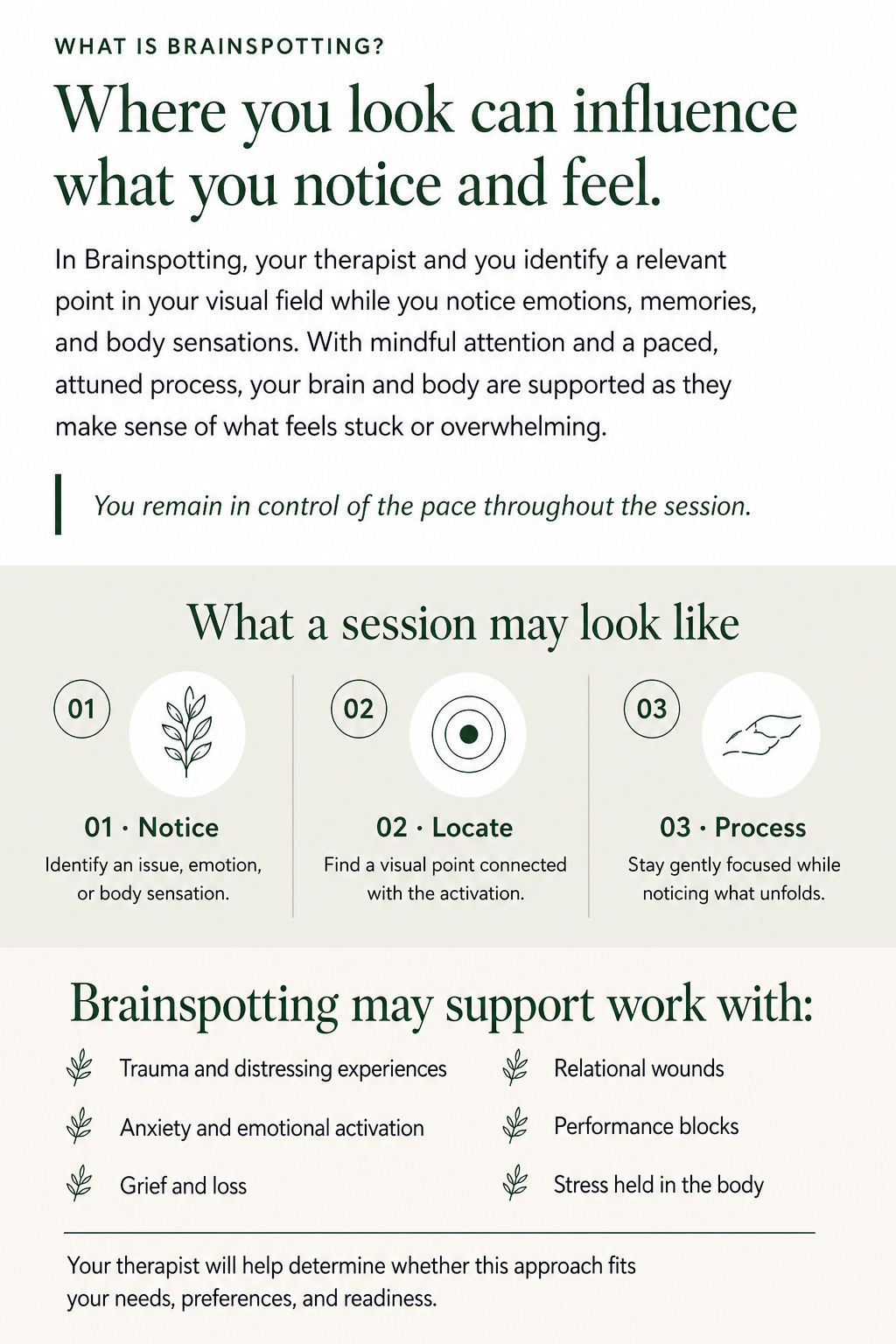
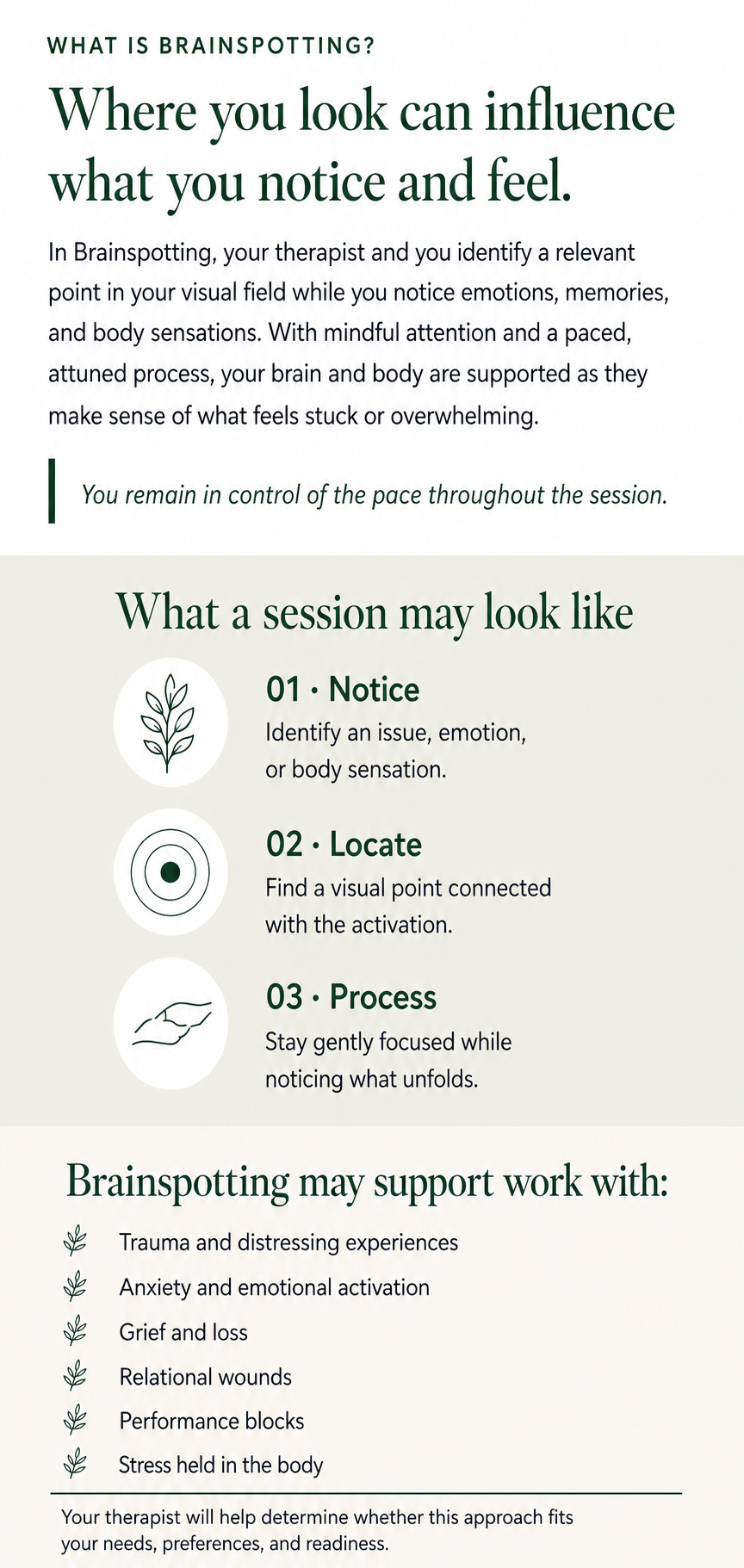
What is Brainspotting? Where you look can influence what you notice and feel. In Brainspotting, your therapist and you identify a relevant point in your visual field while you notice emotions, memories, and body sensations. With mindful attention and a paced, attuned process, your brain and body are supported as they make sense of what feels stuck or overwhelming. You remain in control of the pace throughout the session. What a session may look like: 01 Notice, identify an issue, emotion, or body sensation. 02 Locate, find a visual point connected with the activation. 03 Process, stay gently focused while noticing what unfolds. Brainspotting may support work with: trauma and distressing experiences, anxiety and emotional activation, grief and loss, relational wounds, performance blocks, stress held in the body. Your therapist will help determine whether this approach fits your needs, preferences, and readiness.
A collaborative process: attuned to you, healing at your pace. Your therapist attunes to your experience, offers choice, and respects your pacing. Together, you build the capacity to stay present with what matters, while grounding and stabilization are prioritized. Choice, pacing, connection.