Office Hours Open: M-F 8am - 7pm
Call Us: ‪(858) 215-2319‬
e-mail: info@groundedrootsmht.com
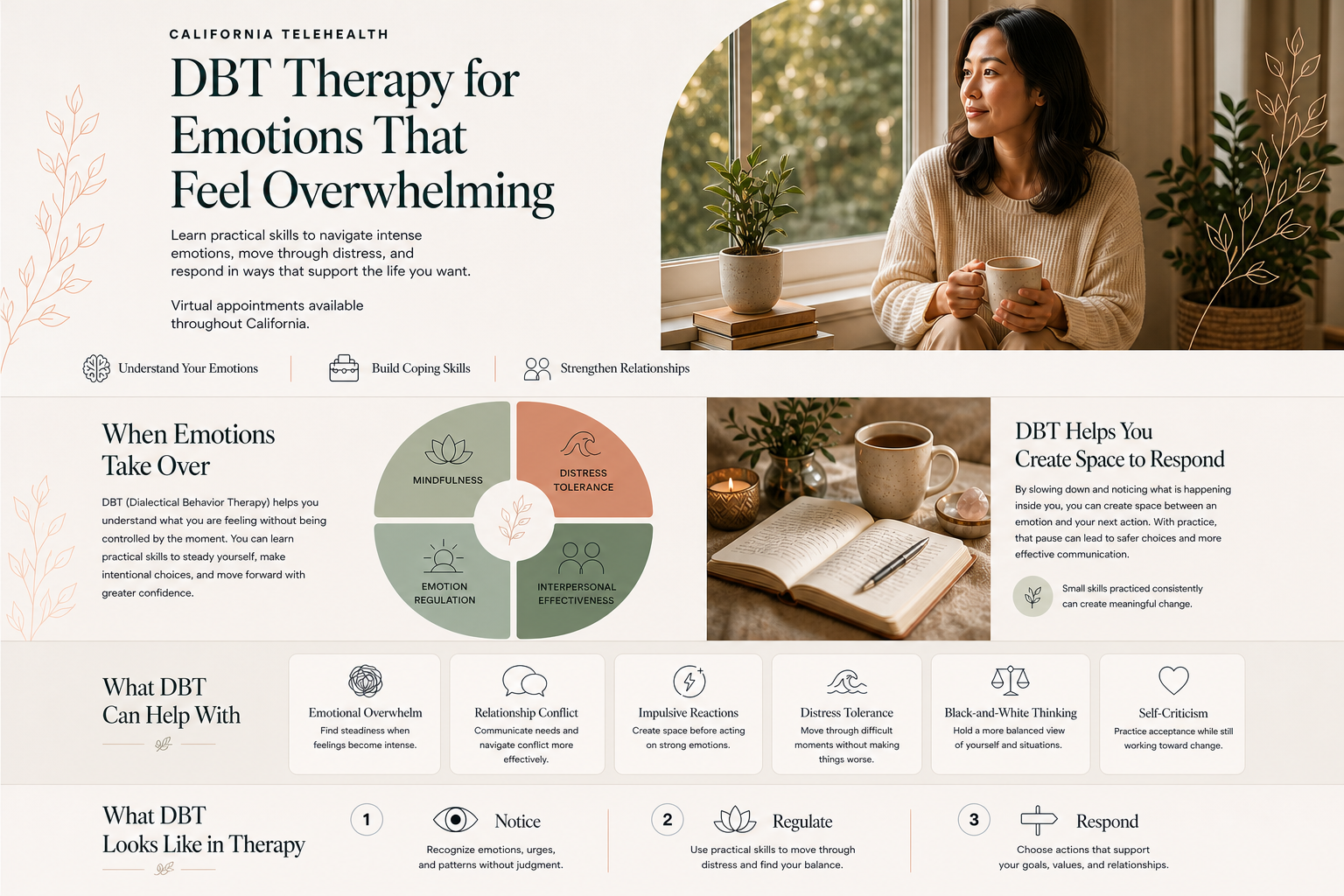
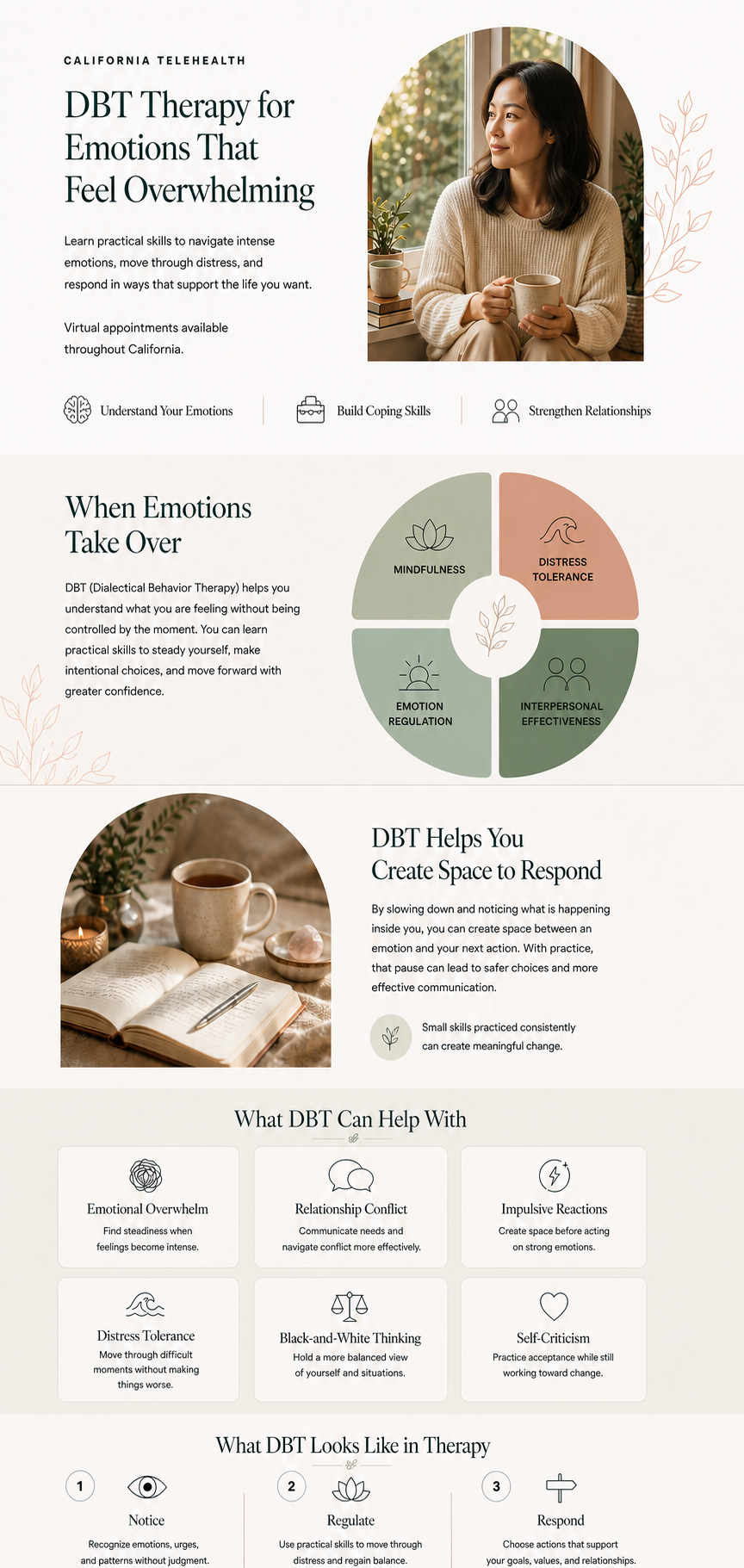
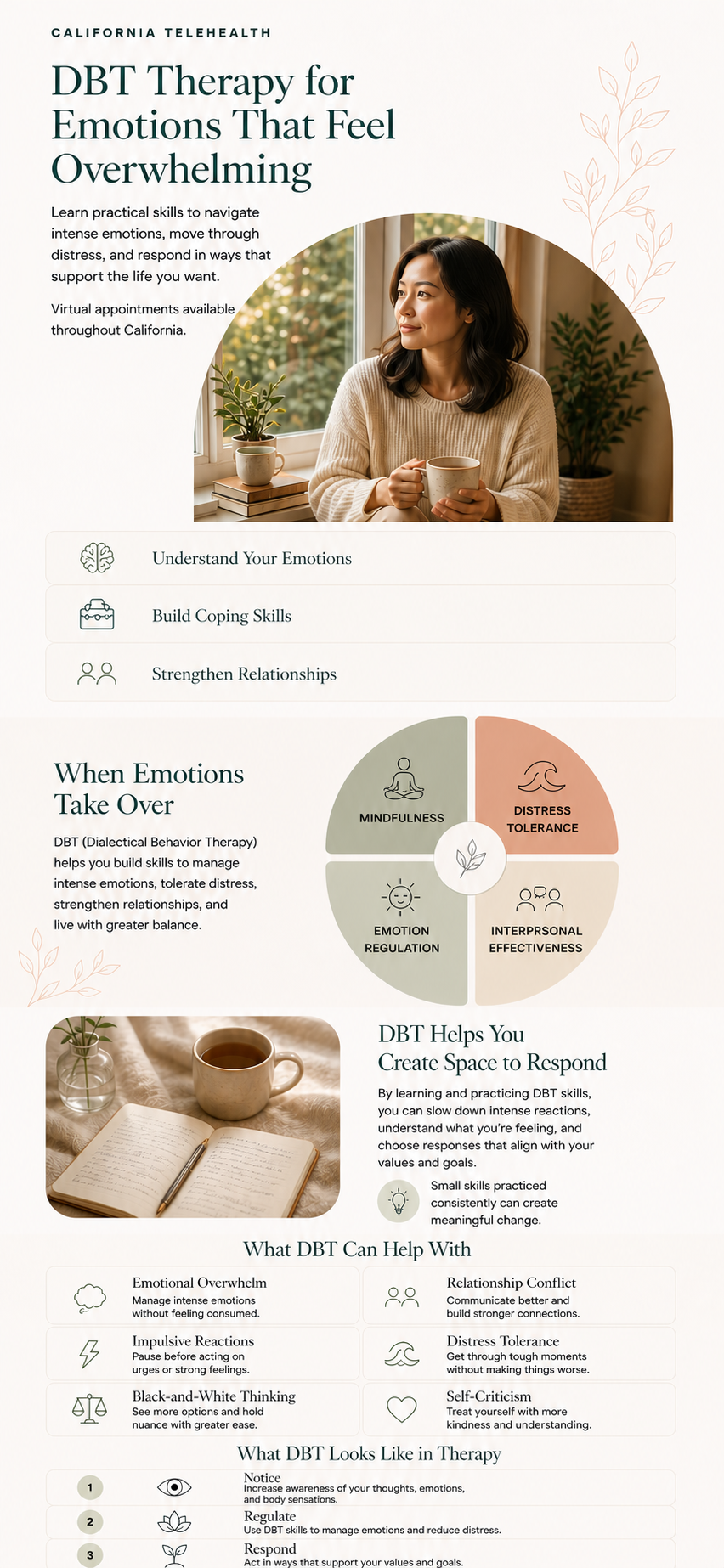
DBT therapy for emotions that feel overwhelming, California telehealth. Learn practical skills to navigate intense emotions, move through distress, and respond in ways that support the life you want. Virtual appointments available throughout California. Understand your emotions, build coping skills, strengthen relationships. When emotions take over: DBT (Dialectical Behavior Therapy) helps you understand what you are feeling without being controlled by the moment. You can learn practical skills to steady yourself, make intentional choices, and move forward with greater confidence. DBT helps you create space to respond: by slowing down and noticing what is happening inside you, you can create space between an emotion and your next action. With practice, that pause can lead to safer choices and more effective communication. Small skills practiced consistently can create meaningful change. What DBT can help with: emotional overwhelm (find steadiness when feelings become intense), relationship conflict (communicate needs and navigate conflict more effectively), impulsive reactions (create space before acting on strong emotions), distress tolerance (move through difficult moments without making things worse), black-and-white thinking (hold a more balanced view of yourself and situations), self-criticism (practice acceptance while still working toward change). What DBT looks like in therapy: Notice, recognize emotions, urges, and patterns without judgment. Regulate, use practical skills to move through distress and regain balance. Respond, choose actions that support your goals, values, and relationships.